Combining Everyday Style with Wellness Tracking
Explore what women should consider when choosing a smart ring, from minimalist design and everyday comfort to supported wellness features and app compatibility.
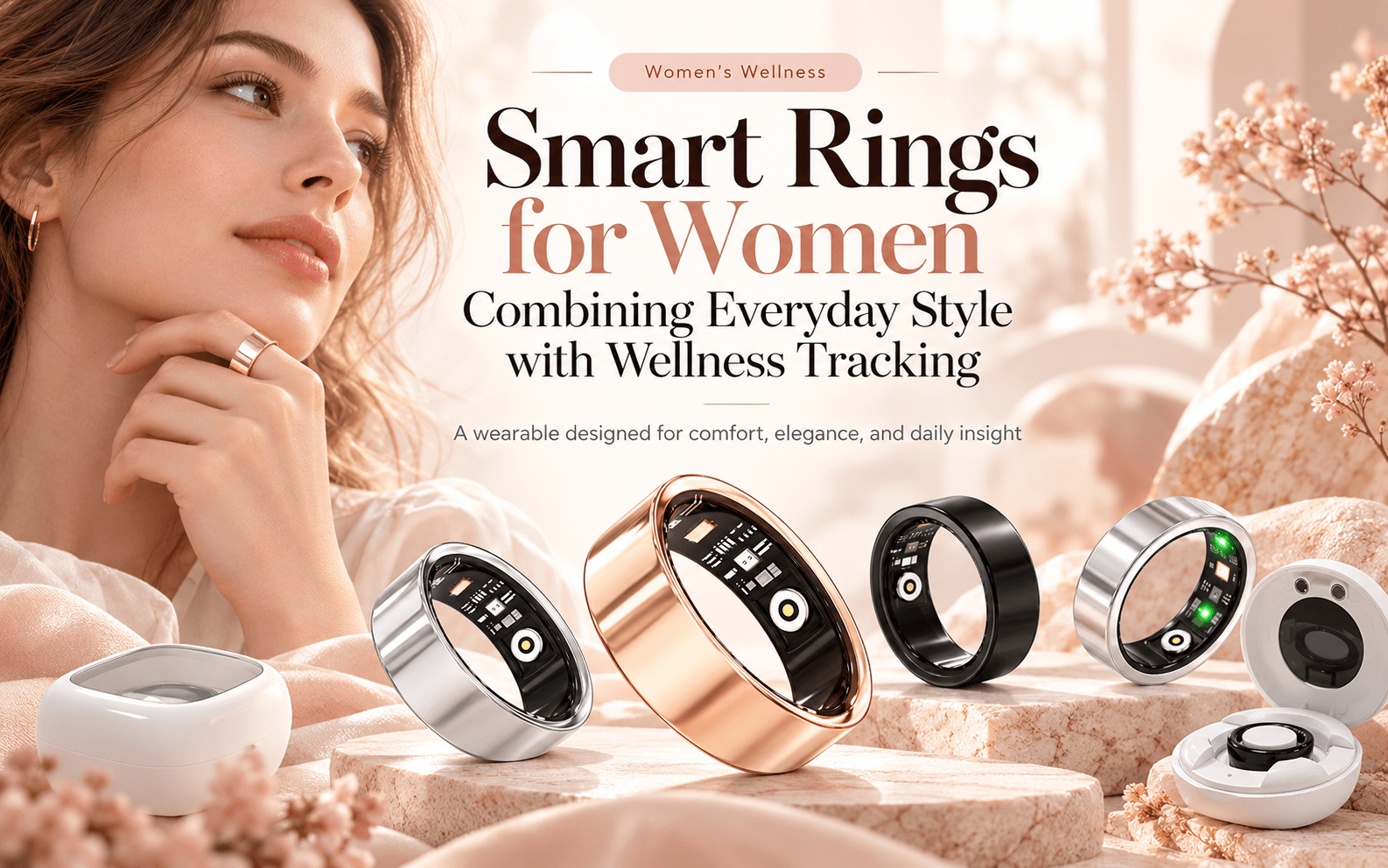
Wearable technology is no longer defined by large screens and sporty wristbands alone. Consumers increasingly have access to devices designed to blend into everyday life while offering connected features.
Smart rings represent one option for people who want a discreet wearable accessory. For women who value both appearance and functionality, the category raises several practical questions: How comfortable is the ring? Which features are genuinely useful? And what should buyers know about women's health tracking?
The answers depend on the individual, the device, and the software that supports it.
1. A Wearable That Fits Personal Style
A smart ring combines the familiar shape of a ring with embedded electronic components.
Depending on the model, buyers may find different finishes, colors, surface treatments, and design profiles. These choices can make the device feel more like a personal accessory than a conventional piece of sports technology.
A minimalist design may also be easier to coordinate with everyday clothing, workwear, or other jewelry.
Nevertheless, appearance should not be the only consideration. The internal construction, ring width, weight, and sizing options all affect comfort.
Before purchasing, check whether the manufacturer provides a sizing guide and clear information about the available finishes and materials.
2. Everyday Comfort and Wearability
Comfort matters because a wearable device is most useful when it fits naturally into a person's routine.
A smart ring may appeal to users who prefer not to wear a smartwatch or fitness band throughout the day. Its screenless format also means that users generally review supported data through a companion app rather than interacting with a display on the ring.
However, finger size can change temporarily with temperature, activity, and other everyday conditions. A ring that feels comfortable in one situation may feel different in another.
Choose the correct size, follow the manufacturer's fitting guidance, and review the product's instructions for exercise, charging, cleaning, and water exposure.
3. Understanding Wellness Tracking Features
Smart rings may support different combinations of wellness features.
Depending on the model, these can include heart rate monitoring, sleep tracking, activity records, and other supported measurements.
For users interested in general wellness, the benefit is the ability to view selected data in one application and observe how patterns change over time.
The actual experience depends on the product's sensors, software algorithms, app design, and measurement limitations.
A longer feature list does not automatically mean a better product. Buyers should prioritize the metrics they genuinely want to use and verify that those functions are supported by the specific model.
4. What About Women's Health Tracking?
Women's health is a broad category that can include menstrual cycle tracking, cycle-related symptom records, ovulation estimates, and other wellness information.
Some wearable ecosystems offer features designed around these needs. However, not every smart ring includes them, and the presence of health sensors does not automatically mean that a device can provide reliable cycle predictions.
Women's health functions often depend on several elements working together:
A ring that records temperature-related data, for example, should not automatically be described as providing ovulation prediction unless that capability has been implemented and validated in the associated software.
Consumers should check the actual app functions and understand whether a feature provides general tracking, an estimate, or a clinically supported result.
Smart ring data should not be used as the sole basis for contraception decisions or other high-stakes reproductive health decisions.
5. Why App Design Matters
The app is often where the main value of a smart ring becomes visible.
Users should be able to review supported measurements, understand historical trends, and manage their data without unnecessary complexity.
Before choosing a product, consider whether the application:
An attractive ring paired with a confusing or poorly supported application may not deliver a satisfying experience.
6. Questions to Ask Before Buying
Before selecting a smart ring for daily wellness tracking, review the following:
These practical details can help you choose a device that matches your routine rather than purchasing based only on appearance or marketing claims.
Smart rings offer an alternative approach to wearable technology by combining a compact accessory format with supported digital wellness features. For women, the most suitable option is one that balances design, fit, useful measurements, app quality, and clear privacy information.
Women's health functions should be evaluated separately from general health tracking, since their availability and reliability depend on the actual device and software.
Explore available smart ring designs and compare their confirmed features before choosing a wearable for everyday use.