Do We Really Need Another Screen? The Rise of Screen-Free Wearables
Discover why screen-free wearables are gaining attention as brands look for simpler, longer-lasting health and fitness tracking solutions.
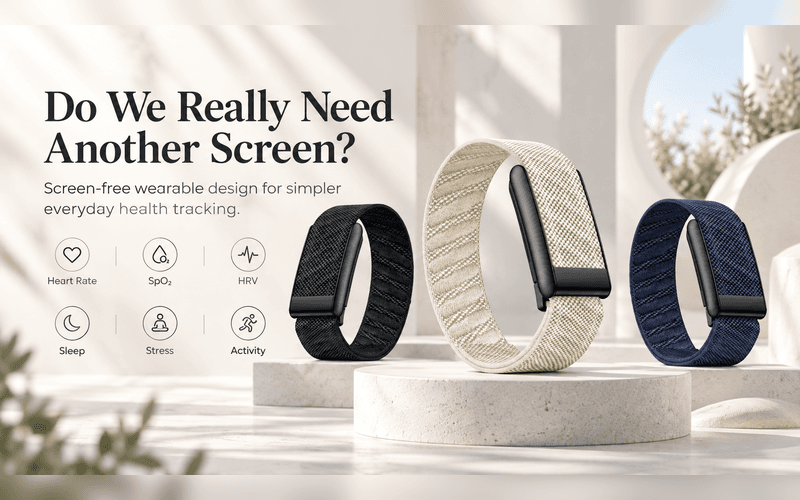
Smartwatches have become increasingly powerful.
Larger displays, richer interfaces and more applications have helped transform wearable devices into miniature computers worn on the wrist.
But as the wearable market matures, another product philosophy is beginning to attract attention: screen-free wearables.
Instead of asking how many additional functions can be placed on a display, screen-free products ask a different question:
What if the wearable simply collected useful information in the background?
From Interaction to Passive Tracking
Many consumers already spend a significant part of their day interacting with smartphones, computers and tablets.
Adding another screen can provide convenience, but it can also create another source of notifications and digital distraction.
A screen-free fitness tracker takes a different approach.
The device can focus primarily on measurements such as heart rate, blood oxygen, sleep, activity, HRV and stress trends, while detailed information is reviewed through a connected smartphone application when needed.
This creates a more passive relationship between the user and the wearable.
Battery Life Becomes an Important Advantage
Displays are one of the major power-consuming components in wearable devices.
Removing the display can therefore help manufacturers create products with significantly longer operating times.
For example, the A50 smart bracelet combines a screen-free design with a 120mAh battery and offers up to approximately 40 days of use, depending on usage conditions.
Longer battery life can reduce charging interruptions and potentially make continuous tracking easier.
A New Positioning Opportunity for Wearable Brands
The screen-free category does not necessarily replace smartwatches.
Instead, it creates another segment between traditional fitness trackers and advanced smartwatches.
For wearable brands and distributors, this creates opportunities to target users who prioritize:
As competition in the smartwatch category increases, product differentiation may come not only from adding more technology, but also from designing a clearer and simpler user experience.