How to Choose Profitable Smartwatches for Your Wholesale Business
Explore how smartwatch wholesalers and distributors can select suitable products, compare market segments, evaluate costs, and build a competitive product lineup.
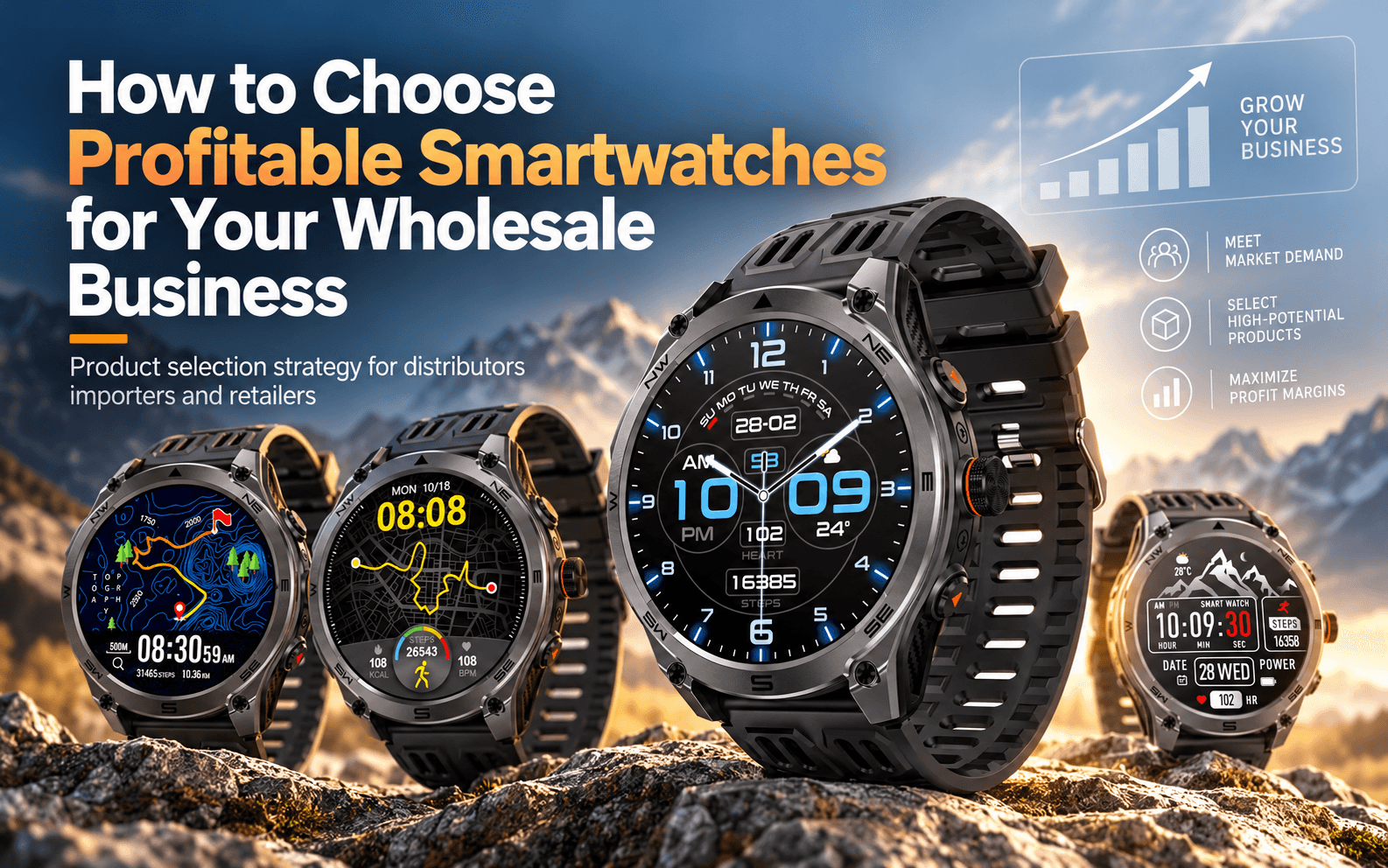
The smartwatch market offers a wide variety of products for importers, distributors, and retailers.
However, selecting the right products for a wholesale business requires more than comparing factory prices and specifications.
A commercially attractive smartwatch needs to match consumer expectations, retail positioning, and the overall costs of bringing a product to market.
For businesses planning to expand their smart watch product range, a structured product selection strategy can help reduce unnecessary risks.
Understand Your Target Market Before Choosing Products
Different consumers purchase smartwatches for different reasons.
Some prioritize fitness tracking and convenience.
Others are interested in attractive designs, health monitoring, or outdoor activity functions.
A product that appeals to one audience may not be suitable for another.
For example, a smartwatch designed for daily notifications may not satisfy consumers seeking outdoor positioning features.
Similarly, a rugged outdoor style smartwatch may be unnecessarily large or complex for someone who prefers a lightweight everyday wearable.
Wholesalers should therefore begin by defining their customer groups and sales channels. Our outdoor smartwatch manufacturer guide explains additional supplier and product criteria to consider.
Build a Product Line with Clear Market Segments
A smartwatch wholesale portfolio can include multiple product categories.
Each category should have a clear reason to exist within the product lineup.
A carefully selected collection can be easier for distributors to position than a large catalog of nearly identical products.
Choose Features That Customers Actually Value
A long specification list does not automatically guarantee stronger consumer demand.
Instead, brands should consider which features are meaningful for their audience.
For outdoor lifestyle consumers, features such as GPS, battery performance, display readability, and water resistance may influence product selection.
Our MA70 outdoor smartwatch integrates these types of capabilities.
It features a 1.75 inch AMOLED display, built in GPS, electronic compass, barometer, 950mAh battery, and more than 100 sports modes.
These specifications make it a possible candidate for an outdoor lifestyle product collection.
However, its commercial suitability should be evaluated against the expected retail price and target user requirements.
Evaluate the Total Cost of Sourcing
The factory unit price is only one part of the cost of selling a smartwatch.
Depending on the business model, other expenses may include international transportation, import duties, product compliance, packaging, marketing, marketplace fees, and after sales support.
Private label projects may also involve additional branding or software development costs. Our private label smartwatch guide outlines the product, branding, App, SDK, and MOQ considerations involved.
These expenses should be included when assessing the financial viability of a product.
Importers should avoid comparing factory quotations without considering differences in product specifications and service requirements.
Avoid Competing Only on Low Prices
Price competition is common in consumer electronics.
However, continually reducing selling prices may not be the most sustainable strategy for every business.
Clear product positioning can help brands communicate why a particular model is relevant to its intended consumers.
For example, an outdoor lifestyle smartwatch can be positioned around practical outdoor functions, active living, and everyday convenience.
This approach may provide a more focused sales message than offering a generic smartwatch with a long list of features.
Product claims should always reflect verified capabilities.
Evaluate Supplier Support for Future Product Development
Wholesalers should also consider whether a manufacturing partner can support their long term product plans.
Relevant questions may include customization availability, software support, production requirements, and the ability to evaluate different product categories.
For brands developing private label collections, these factors can influence future product decisions.
Our company works across smart wearables and smart home products and supports overseas B2B customers with product sourcing and customization discussions.
Final Thoughts
Choosing commercially suitable smartwatches requires a combination of customer research, technical evaluation, cost planning, and supplier assessment.
For distributors, the objective should be to select products that fit their target market rather than simply purchasing the lowest priced models.
Outdoor lifestyle smartwatches such as the MA70 may offer opportunities for businesses seeking a differentiated wearable product category.
Looking to expand your smartwatch wholesale product range?
Contact us and tell us your target market, sales channels, preferred product positioning, and estimated order quantity so we can discuss suitable smartwatch options.