How Wearable Brands Can Differentiate in a Crowded Fitness Tracker Market
Discover seven practical ways wearable brands can differentiate fitness trackers beyond adding more features.
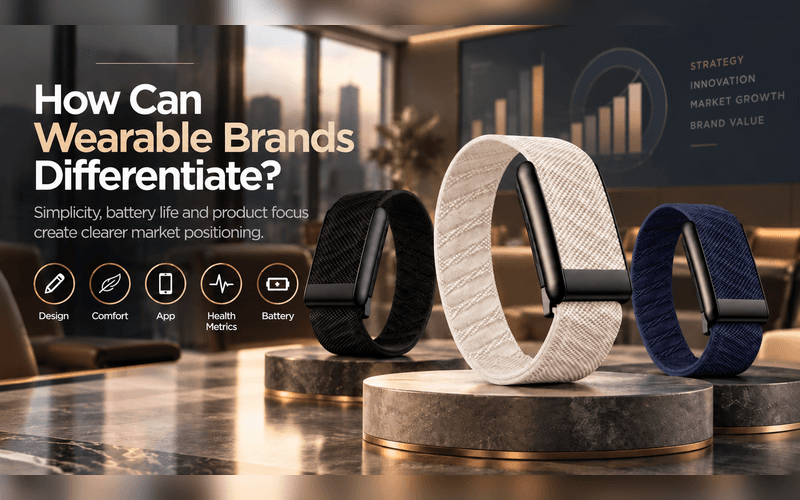
The wearable market has become highly competitive.
Many products now share similar core functions, including heart-rate monitoring, blood oxygen measurement, sleep tracking and sports modes.
This creates an important question for brands:
If specifications look increasingly similar, where does differentiation come from?
1. Product Positioning
Different products can serve different users.
A sports-focused wearable should communicate differently from a wellness tracker or lifestyle accessory.
Clear positioning makes product selection easier for consumers.
2. Form Factor
Design can create immediate differentiation.
Screen-free bracelets, rings and lightweight bands offer alternatives to traditional rectangular smartwatches.
3. Battery Life
Long battery life remains a clear consumer benefit.
For some users, charging frequency may influence their purchase decision more than additional software functions.
4. Health Features
Brands can build product stories around relevant wellness metrics such as sleep, HRV, stress and activity.
5. App Experience
The wearable itself is only one part of the ecosystem.
Data presentation and application usability strongly influence perceived product quality.
6. Comfort
A wearable intended for continuous use must remain comfortable during work, exercise and sleep.
7. Brand Storytelling
Finally, strong products need clear stories.
Instead of simply listing functions, brands should explain why the product exists and what consumer problem it solves.
This is particularly important in crowded wearable categories where technical specifications alone are no longer enough.