More Features or Better Focus? Rethinking Wearable Product Strategy
Why adding more functions may not always create a better fitness tracker, and how focused wearable design can improve product positioning.
Technology products often compete by adding capabilities.
Wearable devices are no exception.
Each generation introduces new sports modes, notifications, sensors and interfaces.
But product development eventually reaches an important question:
Does every additional feature improve the user experience?
Complexity Has a Cost
More features can create more menus, more settings and more interaction.
For some customers, this is valuable.
For others, the result may simply feel complicated.
This is why product focus is becoming increasingly important.
Different Users Need Different Products
Not every consumer needs a smartwatch capable of replacing part of their smartphone experience.
Some users primarily want:
For these customers, a simpler wearable may provide everything they actually need.
Focus Can Also Strengthen Positioning
Clear product positioning helps brands avoid competing solely on specifications.
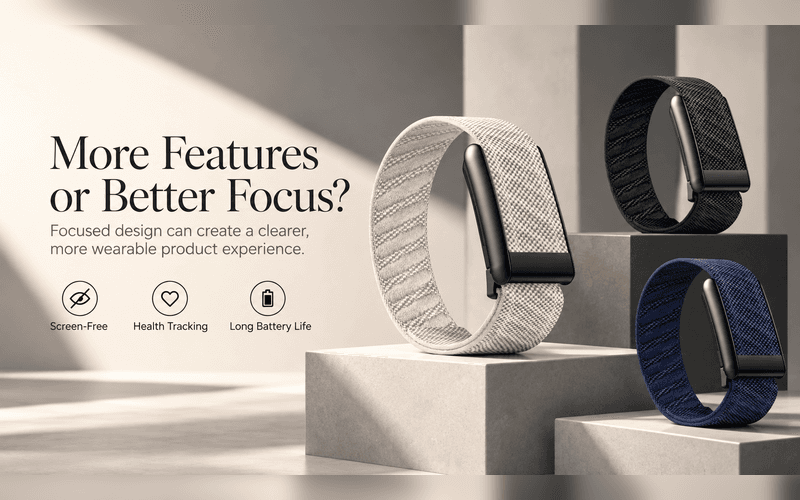
A screen-free wearable, for example, can be positioned around simplicity, health tracking and long-term wear rather than applications and displays.
This creates a more distinctive product story.
Product Strategy Is About Choosing What Matters
Successful product development is not simply about maximizing the number of features.
It is about understanding which functions are most relevant to the intended user.
As wearable markets become more competitive, focused products may become just as important as feature-rich ones.