Smart Ring vs Fitness Tracker: Which Wearable Fits Your Lifestyle?
Compare smart rings and fitness trackers by design, comfort, health monitoring, screen interaction, app features, and everyday usability to find the right wearable.
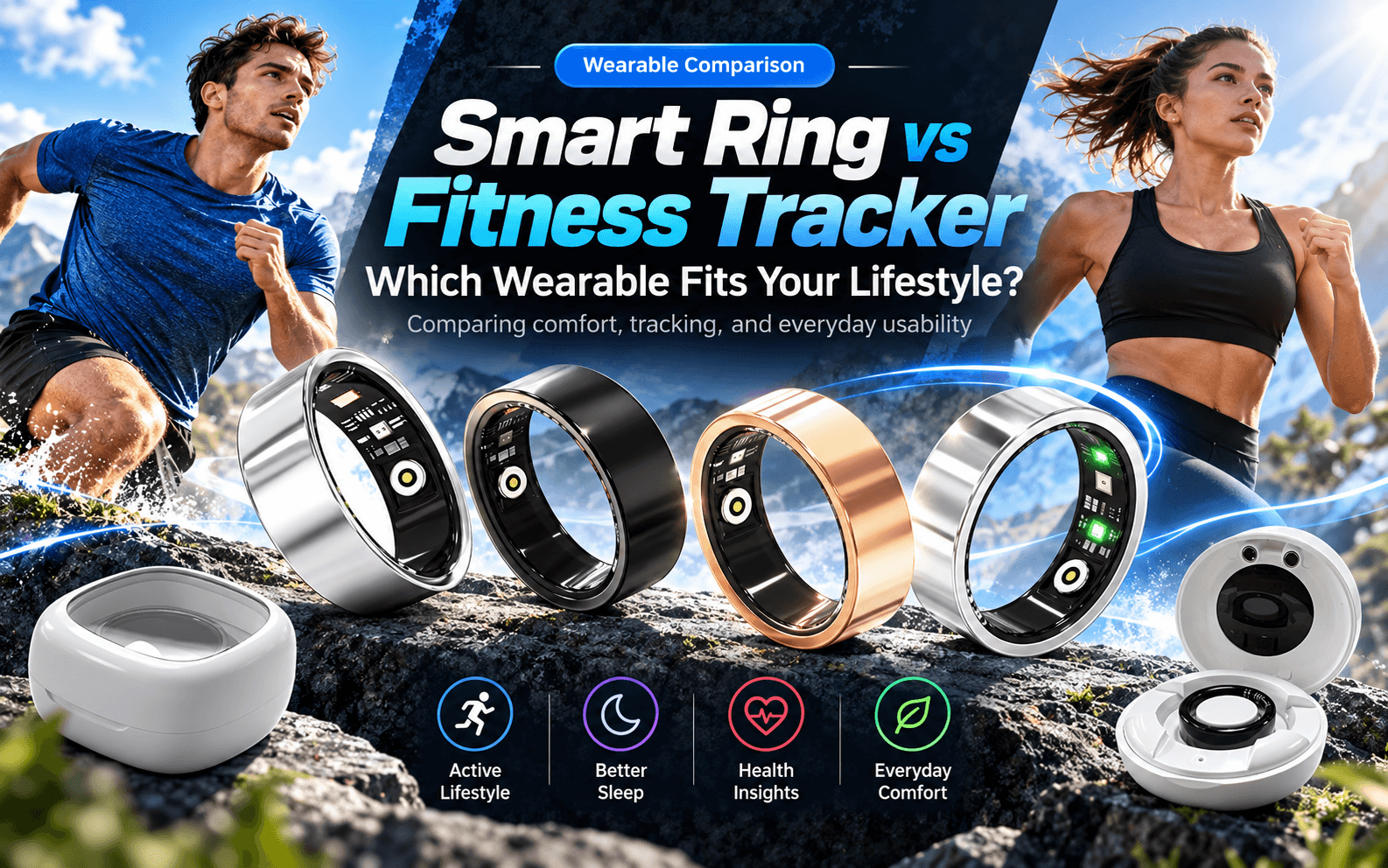
Choosing a wearable device is no longer simply a question of whether to buy a smartwatch. Smart rings, fitness bands, and other compact trackers offer different ways to record activity and access personal data.
Although these devices may share certain monitoring functions, they differ in form factor, interaction, wearing experience, and software capabilities.
Understanding these differences can help consumers select a product that matches their priorities.
1. Design and Wearing Experience
The most obvious difference is where and how each device is worn.
A smart ring sits on the finger and generally has a compact, screenless design. Its appearance may be closer to traditional jewelry, making it an option for users who prefer discreet technology.
A fitness tracker or smart band is worn on the wrist. Many models use a lightweight band design, while others include a display for viewing activity data and notifications.
Neither format is inherently more comfortable for everyone. Some users prefer the feeling of a ring, while others find wrist-worn devices easier to adjust, remove, and operate.
Personal preference, correct sizing, material, and the intended activity all influence the experience.
2. Screen Interaction and Access to Information
A screen is one of the main distinctions between these product categories.
Many smart rings rely on a smartphone application to display measurements and historical records. The ring itself typically provides little or no direct visual feedback.
Fitness trackers vary more widely. Some offer simple indicator lights, while others include displays that allow users to check steps, exercise statistics, or notifications directly from the wrist.
For users who prefer to access information without reaching for a phone, a display-equipped fitness tracker may be more convenient.
For those who prefer a less screen-focused experience, a screenless smart ring may be an appealing alternative.
3. Health Monitoring Capabilities
Both smart rings and fitness trackers may support health-related measurements, but the available features depend on the specific model.
Possible functions include heart rate monitoring, sleep tracking, activity records, and other supported wellness measurements.
It is important not to compare devices based only on category-level assumptions.
A particular smart band may support more exercise modes than a particular ring. Another ring may provide a different sleep-data experience than a basic fitness band.
When comparing products, review the actual specifications, app features, sensor configurations, and available performance documentation.
4. Exercise and Sports Use
The best wearable for exercise depends on the type of activity.
For users who want to view workout information directly on the wrist, a fitness tracker with a display may offer a more convenient experience.
A smart ring may appeal to people who want a compact accessory for everyday activity and supported wellness tracking. However, ring comfort and measurement reliability can vary during activities involving heavy gripping, impact, or repetitive hand movement.
Some sports may also create a risk of injury when wearing a ring. Users should follow appropriate safety guidance and remove jewelry when required by the activity.
Neither product category should be assumed to provide identical exercise tracking or performance in every sport.
5. Sleep Tracking and Overnight Wear
Sleep tracking is a common reason consumers consider screenless wearables.
A smart ring may suit users who prefer not to wear a wrist-mounted device overnight. A fitness band may be preferable for those who already find wrist wear comfortable.
The relevant questions are whether the device supports the required sleep metrics, whether it is comfortable enough for consistent use, and whether the application explains the results clearly.
Battery performance, charging frequency, and data synchronization also affect the overall experience.
Consumers should compare actual product specifications rather than assuming that one form factor always provides better sleep data.
6. Battery Life and Charging
Battery performance varies considerably between models.
Factors such as battery capacity, sensor operation, measurement frequency, Bluetooth communication, software features, and usage patterns can affect operating time.
A smart ring's compact size does not automatically mean that it lasts longer than a fitness tracker. Similarly, a larger device does not guarantee superior battery performance.
Check the manufacturer's stated operating time, charging method, and conditions used to obtain the published figure.
For buyers who want to wear a device continuously, charging convenience is an important part of the decision.
7. Price and Overall Value
Price should be evaluated in relation to the features and ongoing costs of ownership.
Some devices provide essential activity tracking at a relatively accessible price. Others offer more advanced software, additional measurements, or premium materials.
Buyers should also consider whether the application requires a subscription, whether important features depend on a cloud service, and whether the device remains useful without an internet connection.
A higher price is justified only when the additional capabilities offer meaningful value to the user.
8. Which Wearable Should You Choose?
A smart ring may be suitable if you prioritize:
A fitness tracker may be suitable if you prioritize:
These are general considerations, not guarantees. The specifications of the individual device should guide the final decision.
Finding the Right Fit for Your Routine
Smart rings and fitness trackers address overlapping needs through different product designs.
A smart ring emphasizes a compact, screenless form, while a fitness tracker may provide more direct wrist-based interaction and exercise features. Neither category is universally better.
The right choice depends on comfort, intended use, verified monitoring capabilities, battery performance, app quality, and price.
Compare available wearable products and choose the form factor that best fits your daily routine.