What Wholesale Buyers Should Know About GPS Smartwatch Features
Learn what wholesale buyers should evaluate when sourcing GPS smartwatches including positioning performance, compass features, battery usage, and software compatibility.
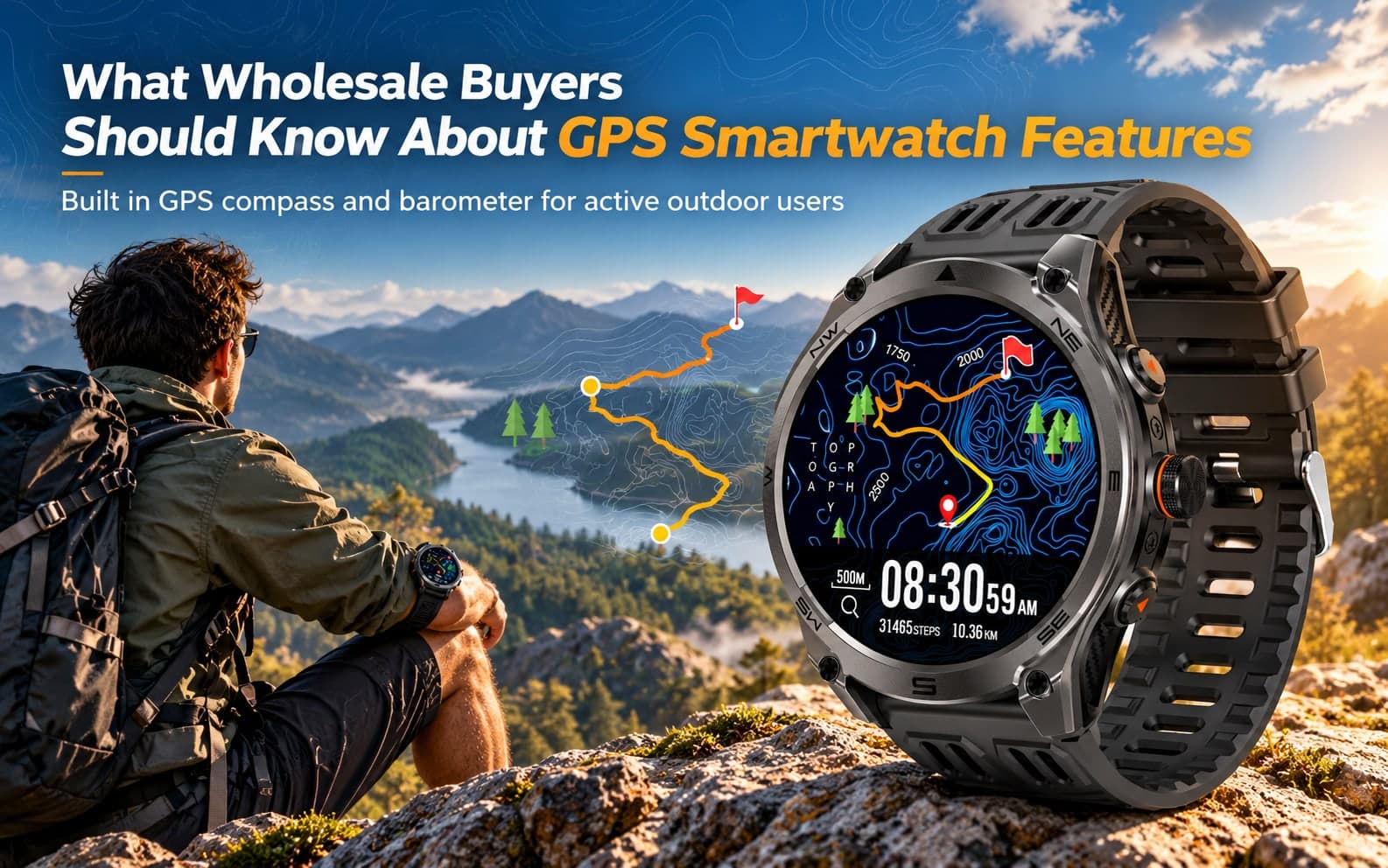
GPS has become an important feature in many outdoor and fitness smartwatches.
For consumers who enjoy running, cycling, hiking, or other outdoor activities, location-related functions can add practical value to their wearable devices.
For wholesale buyers, however, GPS availability alone is not enough to determine whether a smartwatch is suitable for a particular market.
Different products can offer very different positioning capabilities and software experiences. Understanding these differences is essential before sourcing GPS smartwatches in bulk.
1. Understand the Difference Between Built-In GPS and Connected GPS
One of the first questions buyers should ask is whether a smartwatch supports built-in GPS or relies on a connected smartphone.
A smartwatch with built-in GPS positioning hardware can obtain location information independently of a mobile phone under appropriate conditions. Connected GPS typically depends on a paired smartphone to provide positioning information.
These solutions may serve different customer needs.
Consumers who prefer exercising without carrying their phones may value built-in positioning hardware. For brands targeting casual fitness users, connected GPS may be sufficient depending on the intended application.
Therefore, buyers should confirm the actual positioning solution before comparing models.
2. GPS Positioning Does Not Automatically Include Advanced Navigation
A common misunderstanding in smartwatch sourcing is assuming that built-in GPS automatically means the device supports offline maps or advanced route navigation.
GPS positioning, route recording, route guidance, and offline maps are separate functions.
Advanced navigation experiences require appropriate software support. Before placing a bulk order, buyers should verify which functions are included in the specific product firmware.
Clear communication at this stage helps prevent inaccurate product listings and unrealistic consumer expectations.
3. Why Additional Outdoor Sensors Matter
GPS can become more useful when combined with other sensors.
For example, an electronic compass can provide directional information. A barometer measures atmospheric pressure and may support certain outdoor activity features when implemented in software.
Our MA70 outdoor smartwatch combines built-in GPS, an electronic compass, and a barometer. This combination makes the product relevant for brands considering smartwatches for outdoor lifestyle and general fitness consumers.
However, each function should be evaluated according to its actual implementation.
4. How to Evaluate GPS Performance During Sample Testing
For importers and distributors, GPS performance should be tested in realistic usage conditions. Several factors deserve attention.
Testing results can vary depending on the surrounding environment, satellite visibility, firmware, and device configuration. For this reason, buyers should compare products under similar conditions whenever possible.
5. Choose GPS Functions Based on Your Target Market
Not every consumer needs advanced navigation capabilities.
A customer purchasing a smartwatch for daily running may prioritize convenience and reliable activity tracking. Someone planning longer hiking trips may place greater importance on positioning performance, battery usage, and access to directional information.
Professional outdoor users may require more sophisticated navigation functions and higher levels of performance validation.
Understanding the target consumer helps brands avoid paying for unnecessary features or selecting products that do not meet customer expectations.
6. Consider Software and Branding Requirements
For private-label smartwatch projects, hardware functionality is only part of the product experience.
Brands should also consider app language support, operating system compatibility, firmware versions, and available customization services.
For projects involving a customer's own application or backend, SDK access and integration requirements need to be evaluated separately.
The technical feasibility, development costs, and minimum order quantities depend on the selected product and project scope.
Final Thoughts
When sourcing GPS smartwatches in bulk, buyers should look beyond the presence of a GPS chip.
Positioning performance, additional sensors, software functionality, and battery usage all influence the consumer experience.
For outdoor lifestyle brands, products such as the MA70 offer a combination of GPS, compass, barometer, and general smartwatch functions that may support a differentiated product lineup.
Interested in sourcing GPS smartwatches for your market?