Why HRV, Sleep and Stress Matter in Modern Wearables
Fitness trackers are moving beyond steps. Learn why HRV, sleep and stress tracking are becoming important features in modern wearables.
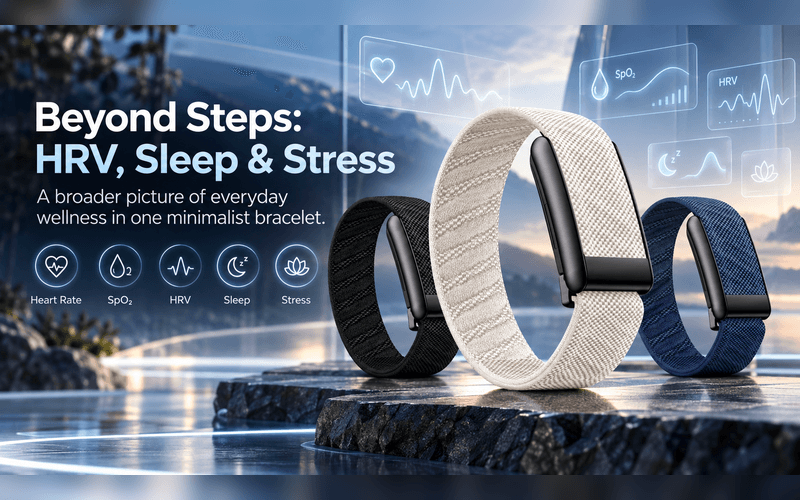
Early fitness trackers were primarily designed to measure movement.
Step counting, calories and distance were among the first features that helped wearable devices reach mainstream consumers.
Today, the category is changing.
Consumers increasingly expect wearable devices to provide a broader view of daily health and lifestyle trends.
HRV
Heart rate variability, commonly known as HRV, measures variations in the timing between heartbeats.
Many wearable platforms use HRV trends as one of several indicators related to recovery and daily physiological state.
For users, long-term trends may provide more useful context than a single measurement.
Sleep
Sleep tracking has become one of the most important reasons people wear fitness devices overnight.
A wearable that remains on the wrist can help users understand general sleep duration and patterns.
Long battery life becomes especially relevant here because frequent overnight charging can interrupt sleep tracking.
Stress Monitoring
Wearable stress features typically combine sensor information and algorithms to estimate changes in physiological state.
These tools are intended for general wellness awareness rather than medical diagnosis.
However, they can help users observe how lifestyle, work, exercise and rest relate to longer-term patterns.
Wearables Are Becoming Lifestyle Tools
The shift from simple activity tracking toward broader wellness information is creating new opportunities for wearable brands.
Products such as A50 combine heart rate, blood oxygen, HRV, sleep, stress and activity monitoring in one screen-free format.
The objective is not to replace professional healthcare.
It is to make everyday health awareness easier.